





huggingface/transformersPublic

🤗 Transformers: the model-definition framework for state-of-the-art machine learning models in text, vision, audio, and multimodal models, for both inference and training.

AI summary: The industry-standard library providing state-of-the-art Machine Learning models for PyTorch, TensorFlow, and JAX.

Stars
167K
+25 today
Forks
34.8K
Watchers
1.2K
Open issues
754
Open PRs
1.6K
Contributors
~4.1K
Commits
24.1K
Branches
1.6K

PythonApache-2.0Created Oct 29, 2018Last push todayLatest release v5.17.0+217 stars this week+2.2K this month

Quick answers

What is transformers?
The industry-standard library providing state-of-the-art Machine Learning models for PyTorch, TensorFlow, and JAX.
What does transformers do?
Transformers provides thousands of highly optimized, pre-trained models to perform incredibly complex tasks across text, vision, and audio modalities. It serves as the fundamental bridge between researchers publishing novel architectures and developers building production applications. The library offers a highly unified, easy-to-use API to instantly download, quickly fine-tune, and reliably deploy massive models like BERT, GPT, and Vision Transformers. By abstracting the immense underlying mathematical complexity, it has massively democratized access to cutting-edge AI, allowing anyone to achieve state-of-the-art performance on NLP and computer vision tasks.
Who is transformers for?
Machine learning engineers, researchers, and developers who need to utilize or fine-tune state-of-the-art AI models. It demands a strong understanding of Python and deep learning frameworks.
How do I get started with transformers?
pip install transformers
How popular is transformers on GitHub?
huggingface/transformers has 166,951 stars and 34,751 forks on GitHub, and gained 217 stars in the last 7 days.
What license does transformers use?
huggingface/transformers is released under the Apache-2.0 license.

Star history

since Sep 22, 2019
050K100K150KSep 2019Jan 2022May 2024Oct 2026
167K stars as of Oct 4, 2026. Before Aug 12, 2026, reconstructed from public GitHub event archives (checked against the repository's real star total); since then measured daily.

Contribution activity

commits per day, last 52 weeks
OctNovDecJanFebMarAprMayJunJulAugSepMonWedFri2025-10-05: 0 commits2025-10-06: 27 commits2025-10-07: 16 commits2025-10-08: 90 commits2025-10-09: 33 commits2025-10-10: 30 commits2025-10-11: 0 commits2025-10-12: 0 commits2025-10-13: 20 commits2025-10-14: 19 commits2025-10-15: 32 commits2025-10-16: 40 commits2025-10-17: 38 commits2025-10-18: 3 commits2025-10-19: 0 commits2025-10-20: 13 commits2025-10-21: 14 commits2025-10-22: 12 commits2025-10-23: 17 commits2025-10-24: 13 commits2025-10-25: 1 commit2025-10-26: 0 commits2025-10-27: 3 commits2025-10-28: 2 commits2025-10-29: 12 commits2025-10-30: 4 commits2025-10-31: 7 commits2025-11-01: 1 commit2025-11-02: 4 commits2025-11-03: 15 commits2025-11-04: 21 commits2025-11-05: 15 commits2025-11-06: 17 commits2025-11-07: 8 commits2025-11-08: 3 commits2025-11-09: 0 commits2025-11-10: 16 commits2025-11-11: 18 commits2025-11-12: 17 commits2025-11-13: 14 commits2025-11-14: 12 commits2025-11-15: 4 commits2025-11-16: 0 commits2025-11-17: 10 commits2025-11-18: 16 commits2025-11-19: 19 commits2025-11-20: 16 commits2025-11-21: 15 commits2025-11-22: 2 commits2025-11-23: 0 commits2025-11-24: 23 commits2025-11-25: 19 commits2025-11-26: 12 commits2025-11-27: 41 commits2025-11-28: 20 commits2025-11-29: 2 commits2025-11-30: 0 commits2025-12-01: 49 commits2025-12-02: 25 commits2025-12-03: 25 commits2025-12-04: 19 commits2025-12-05: 26 commits2025-12-06: 0 commits2025-12-07: 0 commits2025-12-08: 25 commits2025-12-09: 18 commits2025-12-10: 16 commits2025-12-11: 31 commits2025-12-12: 19 commits2025-12-13: 0 commits2025-12-14: 0 commits2025-12-15: 16 commits2025-12-16: 29 commits2025-12-17: 27 commits2025-12-18: 22 commits2025-12-19: 14 commits2025-12-20: 0 commits2025-12-21: 0 commits2025-12-22: 13 commits2025-12-23: 6 commits2025-12-24: 4 commits2025-12-25: 0 commits2025-12-26: 0 commits2025-12-27: 0 commits2025-12-28: 0 commits2025-12-29: 0 commits2025-12-30: 0 commits2025-12-31: 0 commits2026-01-01: 0 commits2026-01-02: 0 commits2026-01-03: 0 commits2026-01-04: 1 commit2026-01-05: 19 commits2026-01-06: 19 commits2026-01-07: 8 commits2026-01-08: 41 commits2026-01-09: 22 commits2026-01-10: 2 commits2026-01-11: 0 commits2026-01-12: 22 commits2026-01-13: 21 commits2026-01-14: 17 commits2026-01-15: 8 commits2026-01-16: 17 commits2026-01-17: 0 commits2026-01-18: 0 commits2026-01-19: 4 commits2026-01-20: 10 commits2026-01-21: 10 commits2026-01-22: 22 commits2026-01-23: 15 commits2026-01-24: 8 commits2026-01-25: 0 commits2026-01-26: 21 commits2026-01-27: 20 commits2026-01-28: 25 commits2026-01-29: 22 commits2026-01-30: 25 commits2026-01-31: 6 commits2026-02-01: 0 commits2026-02-02: 30 commits2026-02-03: 25 commits2026-02-04: 24 commits2026-02-05: 16 commits2026-02-06: 23 commits2026-02-07: 2 commits2026-02-08: 0 commits2026-02-09: 29 commits2026-02-10: 31 commits2026-02-11: 16 commits2026-02-12: 14 commits2026-02-13: 13 commits2026-02-14: 0 commits2026-02-15: 0 commits2026-02-16: 28 commits2026-02-17: 17 commits2026-02-18: 8 commits2026-02-19: 10 commits2026-02-20: 15 commits2026-02-21: 3 commits2026-02-22: 0 commits2026-02-23: 22 commits2026-02-24: 22 commits2026-02-25: 10 commits2026-02-26: 10 commits2026-02-27: 22 commits2026-02-28: 1 commit2026-03-01: 0 commits2026-03-02: 16 commits2026-03-03: 14 commits2026-03-04: 24 commits2026-03-05: 20 commits2026-03-06: 11 commits2026-03-07: 0 commits2026-03-08: 1 commit2026-03-09: 35 commits2026-03-10: 14 commits2026-03-11: 24 commits2026-03-12: 18 commits2026-03-13: 20 commits2026-03-14: 4 commits2026-03-15: 1 commit2026-03-16: 30 commits2026-03-17: 12 commits2026-03-18: 24 commits2026-03-19: 18 commits2026-03-20: 24 commits2026-03-21: 5 commits2026-03-22: 3 commits2026-03-23: 13 commits2026-03-24: 19 commits2026-03-25: 12 commits2026-03-26: 22 commits2026-03-27: 24 commits2026-03-28: 1 commit2026-03-29: 0 commits2026-03-30: 15 commits2026-03-31: 19 commits2026-04-01: 8 commits2026-04-02: 29 commits2026-04-03: 10 commits2026-04-04: 4 commits2026-04-05: 2 commits2026-04-06: 4 commits2026-04-07: 4 commits2026-04-08: 7 commits2026-04-09: 24 commits2026-04-10: 27 commits2026-04-11: 0 commits2026-04-12: 0 commits2026-04-13: 28 commits2026-04-14: 12 commits2026-04-15: 19 commits2026-04-16: 9 commits2026-04-17: 9 commits2026-04-18: 0 commits2026-04-19: 0 commits2026-04-20: 21 commits2026-04-21: 12 commits2026-04-22: 37 commits2026-04-23: 20 commits2026-04-24: 13 commits2026-04-25: 0 commits2026-04-26: 0 commits2026-04-27: 22 commits2026-04-28: 18 commits2026-04-29: 12 commits2026-04-30: 8 commits2026-05-01: 4 commits2026-05-02: 2 commits2026-05-03: 1 commit2026-05-04: 9 commits2026-05-05: 18 commits2026-05-06: 8 commits2026-05-07: 13 commits2026-05-08: 14 commits2026-05-09: 0 commits2026-05-10: 2 commits2026-05-11: 15 commits2026-05-12: 19 commits2026-05-13: 18 commits2026-05-14: 17 commits2026-05-15: 7 commits2026-05-16: 1 commit2026-05-17: 1 commit2026-05-18: 18 commits2026-05-19: 21 commits2026-05-20: 18 commits2026-05-21: 2 commits2026-05-22: 0 commits2026-05-23: 0 commits2026-05-24: 0 commits2026-05-25: 14 commits2026-05-26: 12 commits2026-05-27: 15 commits2026-05-28: 21 commits2026-05-29: 14 commits2026-05-30: 1 commit2026-05-31: 0 commits2026-06-01: 13 commits2026-06-02: 24 commits2026-06-03: 16 commits2026-06-04: 16 commits2026-06-05: 19 commits2026-06-06: 2 commits2026-06-07: 0 commits2026-06-08: 20 commits2026-06-09: 11 commits2026-06-10: 9 commits2026-06-11: 19 commits2026-06-12: 20 commits2026-06-13: 1 commit2026-06-14: 0 commits2026-06-15: 16 commits2026-06-16: 16 commits2026-06-17: 17 commits2026-06-18: 8 commits2026-06-19: 23 commits2026-06-20: 2 commits2026-06-21: 1 commit2026-06-22: 13 commits2026-06-23: 16 commits2026-06-24: 22 commits2026-06-25: 14 commits2026-06-26: 17 commits2026-06-27: 3 commits2026-06-28: 2 commits2026-06-29: 18 commits2026-06-30: 7 commits2026-07-01: 11 commits2026-07-02: 8 commits2026-07-03: 19 commits2026-07-04: 0 commits2026-07-05: 0 commits2026-07-06: 10 commits2026-07-07: 23 commits2026-07-08: 18 commits2026-07-09: 27 commits2026-07-10: 16 commits2026-07-11: 2 commits2026-07-12: 0 commits2026-07-13: 11 commits2026-07-14: 9 commits2026-07-15: 15 commits2026-07-16: 18 commits2026-07-17: 17 commits2026-07-18: 0 commits2026-07-19: 0 commits2026-07-20: 11 commits2026-07-21: 14 commits2026-07-22: 21 commits2026-07-23: 22 commits2026-07-24: 13 commits2026-07-25: 4 commits2026-07-26: 0 commits2026-07-27: 16 commits2026-07-28: 15 commits2026-07-29: 22 commits2026-07-30: 16 commits2026-07-31: 24 commits2026-08-01: 2 commits2026-08-02: 0 commits2026-08-03: 12 commits2026-08-04: 24 commits2026-08-05: 17 commits2026-08-06: 11 commits2026-08-07: 6 commits2026-08-08: 4 commits2026-08-09: 1 commit2026-08-10: 22 commits2026-08-11: 8 commits2026-08-12: 4 commits2026-08-13: 4 commits2026-08-14: 19 commits2026-08-15: 5 commits2026-08-16: 3 commits2026-08-17: 17 commits2026-08-18: 29 commits2026-08-19: 15 commits2026-08-20: 14 commits2026-08-21: 21 commits2026-08-22: 0 commits2026-08-23: 1 commit2026-08-24: 11 commits2026-08-25: 21 commits2026-08-26: 28 commits2026-08-27: 20 commits2026-08-28: 16 commits2026-08-29: 1 commit2026-08-30: 0 commits2026-08-31: 13 commits2026-09-01: 23 commits2026-09-02: 20 commits2026-09-03: 16 commits2026-09-04: 18 commits2026-09-05: 2 commits2026-09-06: 0 commits2026-09-07: 22 commits2026-09-08: 19 commits2026-09-09: 15 commits2026-09-10: 20 commits2026-09-11: 15 commits2026-09-12: 6 commits2026-09-13: 1 commit2026-09-14: 22 commits2026-09-15: 19 commits2026-09-16: 16 commits2026-09-17: 32 commits2026-09-18: 21 commits2026-09-19: 0 commits2026-09-20: 0 commits2026-09-21: 28 commits2026-09-22: 18 commits2026-09-23: 24 commits2026-09-24: 16 commits2026-09-25: 18 commits2026-09-26: 1 commit2026-09-27: 1 commit2026-09-28: 6 commits2026-09-29: 5 commits2026-09-30: 0 commits2026-10-01: 0 commits2026-10-02: 0 commits2026-10-03: 0 commits
4,553 commits in the last yearLessMore

Signals and awards

derived from tracked data
  • Landmark project

    166,951 stars

  • Battle-tested

    7 years of history

  • Very active

    4,553 commits in 52 weeks

  • Community-driven

    ~4,143 contributors

  • Well documented

    High community health score

  • Permissive license

    Apache-2.0

  • Repeat trending

    7 trending appearances

  • Top 10% tracked

    Rank 33 of 1135

What transformers does

Transformers provides thousands of highly optimized, pre-trained models to perform incredibly complex tasks across text, vision, and audio modalities. It serves as the fundamental bridge between researchers publishing novel architectures and developers building production applications. The library offers a highly unified, easy-to-use API to instantly download, quickly fine-tune, and reliably deploy massive models like BERT, GPT, and Vision Transformers. By abstracting the immense underlying mathematical complexity, it has massively democratized access to cutting-edge AI, allowing anyone to achieve state-of-the-art performance on NLP and computer vision tasks.

Machine learning engineers, researchers, and developers who need to utilize or fine-tune state-of-the-art AI models. It demands a strong understanding of Python and deep learning frameworks.

  • Unified model API: Provides a highly consistent interface to seamlessly download, configure, and use thousands of different model architectures.
  • Multi-framework support: Interoperates perfectly across PyTorch, TensorFlow, and JAX, allowing developers to switch backends effortlessly.
  • Pre-trained weights: Grants instant access to tens of thousands of highly performant community models hosted on the Hugging Face Hub.
  • Optimized fine-tuning: Includes highly specialized scripts and utilities to quickly train massive models on custom datasets efficiently.
  • Multi-modal capabilities: Natively supports immensely complex tasks across text analysis, image classification, and speech recognition seamlessly.

Where teams use it

Sentiment analysis

Data scientists rapidly deploying pre-trained RoBERTa models to accurately classify customer reviews into positive and negative sentiments.

Text generation

Developers easily integrating massive autoregressive models to power intelligent chatbots and highly context-aware writing assistants.

Image processing

Computer vision engineers utilizing Vision Transformers to reliably categorize extremely large datasets of medical imagery.

Custom model training

AI researchers leveraging the highly optimized training loops to fine-tune massive foundational models on entirely new, proprietary domains.

Getting started: pip install transformers

README

main branch

Hugging Face Transformers Library

Checkpoints on Hub Build GitHub Documentation GitHub release Contributor Covenant DOI

State-of-the-art pretrained models for inference and training

Transformers acts as the model-definition framework for state-of-the-art machine learning with text, computer vision, audio, video, and multimodal models, for both inference and training.

It centralizes the model definition so that this definition is agreed upon across the ecosystem. transformers is the pivot across frameworks: if a model definition is supported, it will be compatible with the majority of training frameworks (Axolotl, Unsloth, DeepSpeed, FSDP, PyTorch-Lightning, ...), inference engines (vLLM, SGLang, TGI, ...), and adjacent modeling libraries (llama.cpp, mlx, ...) which leverage the model definition from transformers.

We pledge to help support new state-of-the-art models and democratize their usage by having their model definition be simple, customizable, and efficient.

There are over 1M+ Transformers model checkpoints on the Hugging Face Hub you can use.

Explore the Hub today to find a model and use Transformers to help you get started right away.

Installation

Transformers works with Python 3.10+, and PyTorch 2.5+.

Create and activate a virtual environment with venv or uv, a fast Rust-based Python package and project manager.

# venv
python -m venv .my-env
source .my-env/bin/activate
# uv
uv venv .my-env
source .my-env/bin/activate

Install Transformers in your virtual environment.

# pip
pip install "transformers[torch]"

# uv
uv pip install "transformers[torch]"

Install Transformers from source if you want the latest changes in the library or are interested in contributing. However, the latest version may not be stable. Feel free to open an issue if you encounter an error.

git clone https://github.com/huggingface/transformers.git
cd transformers

# pip
pip install '.[torch]'

# uv
uv pip install '.[torch]'

Quickstart

Get started with Transformers right away with the Pipeline API. The Pipeline is a high-level inference class that supports text, audio, vision, and multimodal tasks. It handles preprocessing the input and returns the appropriate output.

Instantiate a pipeline and specify model to use for text generation. The model is downloaded and cached so you can easily reuse it again. Finally, pass some text to prompt the model.

from transformers import pipeline

pipeline = pipeline(task="text-generation", model="Qwen/Qwen2.5-1.5B")
pipeline("the secret to baking a really good cake is ")
[{'generated_text': 'the secret to baking a really good cake is 1) to use the right ingredients and 2) to follow the recipe exactly. the recipe for the cake is as follows: 1 cup of sugar, 1 cup of flour, 1 cup of milk, 1 cup of butter, 1 cup of eggs, 1 cup of chocolate chips. if you want to make 2 cakes, how much sugar do you need? To make 2 cakes, you will need 2 cups of sugar.'}]

To chat with a model, the usage pattern is the same. The only difference is you need to construct a chat history (the input to Pipeline) between you and the system.

Tip

You can also chat with a model directly from the command line, as long as transformers serve is running.

transformers chat Qwen/Qwen2.5-0.5B-Instruct
import torch
from transformers import pipeline

chat = [
    {"role": "system", "content": "You are a sassy, wise-cracking robot as imagined by Hollywood circa 1986."},
    {"role": "user", "content": "Hey, can you tell me any fun things to do in New York?"}
]

pipeline = pipeline(task="text-generation", model="meta-llama/Meta-Llama-3-8B-Instruct", dtype=torch.bfloat16, device_map="auto")
response = pipeline(chat, max_new_tokens=512)
print(response[0]["generated_text"][-1]["content"])

Expand the examples below to see how Pipeline works for different modalities and tasks.

Automatic speech recognition
from transformers import pipeline

pipeline = pipeline(task="automatic-speech-recognition", model="openai/whisper-large-v3")
pipeline("https://huggingface.co/datasets/Narsil/asr_dummy/resolve/main/mlk.flac")
{'text': ' I have a dream that one day this nation will rise up and live out the true meaning of its creed.'}
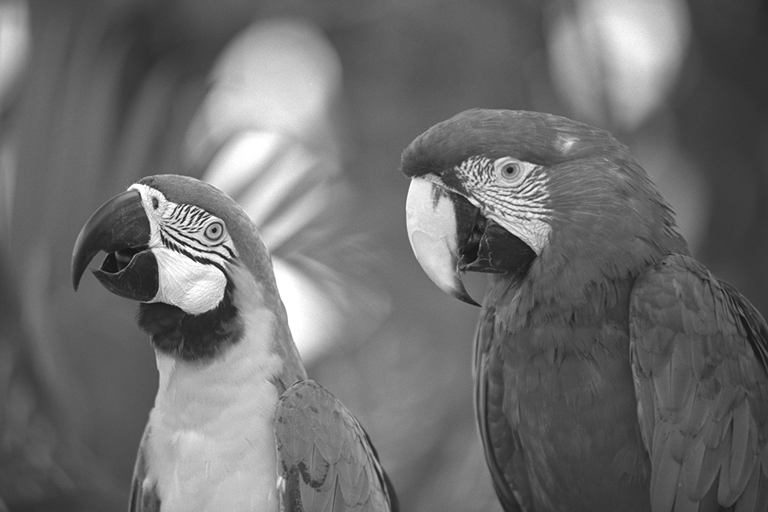
Image classification
from transformers import pipeline

pipeline = pipeline(task="image-classification", model="facebook/dinov2-small-imagenet1k-1-layer")
pipeline("https://huggingface.co/datasets/Narsil/image_dummy/raw/main/parrots.png")
[{'label': 'macaw', 'score': 0.997848391532898},
 {'label': 'sulphur-crested cockatoo, Kakatoe galerita, Cacatua galerita',
  'score': 0.0016551691805943847},
 {'label': 'lorikeet', 'score': 0.00018523589824326336},
 {'label': 'African grey, African gray, Psittacus erithacus',
  'score': 7.85409429227002e-05},
 {'label': 'quail', 'score': 5.502637941390276e-05}]
Visual question answering

from transformers import pipeline

pipeline = pipeline(task="visual-question-answering", model="Salesforce/blip-vqa-base")
pipeline(
    image="https://huggingface.co/datasets/huggingface/documentation-images/resolve/main/transformers/tasks/idefics-few-shot.jpg",
    question="What is in the image?",
)
[{'answer': 'statue of liberty'}]

Why should I use Transformers?

  1. Easy-to-use state-of-the-art models:

    • High performance on natural language understanding & generation, computer vision, audio, video, and multimodal tasks.
    • Low barrier to entry for researchers, engineers, and developers.
    • Few user-facing abstractions with just three classes to learn.
    • A unified API for using all our pretrained models.
  2. Lower compute costs, smaller carbon footprint:

    • Share trained models instead of training from scratch.
    • Reduce compute time and production costs.
    • Hundreds of model architectures with 1M+ pretrained checkpoints across all modalities.
  3. Choose the right framework for every part of a model's lifetime:

    • Train state-of-the-art models in 3 lines of code.
    • Move a single model between PyTorch/JAX/TF2.0 frameworks at will.
    • Pick the right framework for training, evaluation, and production.
  4. Easily customize a model or an example to your needs:

    • We provide examples for each architecture to reproduce the results published by its original authors.
    • Model internals are exposed as consistently as possible.
    • Model files can be used independently of the library for quick experiments.
Hugging Face Enterprise Hub

When shouldn't I use Transformers?

  • This library is not a modular toolbox of building blocks for neural nets. The code in the model files is not refactored with additional abstractions on purpose, so that researchers can quickly iterate on each of the models without diving into additional abstractions/files.
  • The training API is optimized to work with PyTorch models provided by Transformers. For generic machine learning loops, you should use another library like Accelerate.
  • The example scripts are only examples. They may not necessarily work out-of-the-box on your specific use case and you'll need to adapt the code for it to work.

100 projects using Transformers

Transformers is more than a toolkit to use pretrained models, it's a community of projects built around it and the Hugging Face Hub. We want Transformers to enable developers, researchers, students, professors, engineers, and anyone else to build their dream projects.

In order to celebrate Transformers 100,000 stars, we wanted to put the spotlight on the community with the awesome-transformers page which lists 100 incredible projects built with Transformers.

If you own or use a project that you believe should be part of the list, please open a PR to add it!

Example models

You can test most of our models directly on their Hub model pages.

Expand each modality below to see a few example models for various use cases.

Audio
Computer vision
Multimodal
NLP
  • Masked word completion with ModernBERT
  • Named entity recognition with Gemma
  • Question answering with Mixtral
  • Summarization with BART
  • Translation with T5
  • Text generation with Llama
  • Text classification with Qwen

Citation

We now have a paper you can cite for the 🤗 Transformers library:

@inproceedings{wolf-etal-2020-transformers,
    title = "Transformers: State-of-the-Art Natural Language Processing",
    author = "Thomas Wolf and Lysandre Debut and Victor Sanh and Julien Chaumond and Clement Delangue and Anthony Moi and Pierric Cistac and Tim Rault and Rémi Louf and Morgan Funtowicz and Joe Davison and Sam Shleifer and Patrick von Platen and Clara Ma and Yacine Jernite and Julien Plu and Canwen Xu and Teven Le Scao and Sylvain Gugger and Mariama Drame and Quentin Lhoest and Alexander M. Rush",
    booktitle = "Proceedings of the 2020 Conference on Empirical Methods in Natural Language Processing: System Demonstrations",
    month = oct,
    year = "2020",
    address = "Online",
    publisher = "Association for Computational Linguistics",
    url = "https://aclanthology.org/2020.emnlp-demos.6/",
    pages = "38--45"
}
View on GitHub

Recent activity

commits and pull requests

Releases and announcements

272 total
  1. Release 5.17.0v5.17.0Sep 9, 2026

    # Release v5.17.0 ## New Model additions ### HYV4 <img width="1503" height="827" alt="image" src="https://github.com/user-attachments/assets/e6ed85ee-eb1d-40eb-a0d4-c649f6337ca9" /> Hy4-Preview is a 780B-parameter mixture-of-experts language model that activates 49B parameters per token. Each MoE layer holds 256 routed experts plus one always-active shared expert and routes every token to 8 of them. The context window is 1M tokens. The architecture combines four features: - **Multi-head Latent Attention (MLA)** compresses keys and values into a low-rank latent (`kv_lora_rank`) that `kv_b_proj` expands back to one key/value per query head. - **DeepSeek Sparse Attention (DSA)** selects `index_topk` keys per query with a lightweight indexer. Following [IndexShare](https://huggingface.co/papers/2603.12201), only the layers marked `"full"` in `indexer_types` run an indexer; `"shared"` layers reuse the previous full layer's selection. - **Gated MLA with learnable attention sinks**, where each head owns a sink logit that participates in the softmax and contributes no value, as in [GPT-OSS](./gpt_oss). - **Independent Hyper-Connections (iHC)** replace

  2. Release v5.16.1v5.16.1Aug 26, 2026

    # Release v5.16.1 This is a special release as we include GLM! (and a few small fixes) # GLM-5.3-Flash <img width="4239" height="2643" alt="image" src="https://github.com/user-attachments/assets/17bc9c29-758b-44c8-8230-42f945ded209" /> GLM-5.3-Flash, the first **natively multimodal model** in the GLM-5 series. With 320B total parameters and just 18B active parameters, it outperforms GLM-5.2 across benchmarks and real-world workloads at one-tenth the price, while approaching Claude Opus 4.8 on coding and agentic benchmarks. GLM-5.3-Flash starts from a newly trained base model, with its architecture and training recipe redesigned around capability and efficiency. For the first time in the GLM series, we introduce a hybrid architecture combining sparse and linear attention, sharply reducing long-context serving costs while preserving precise long-context capabilities. The model also adopts Manifold-Constrained Hyper-Connections (mHC) to further improve scaling efficiency. Together with our latest **30T-token** multimodal pre-training corpus, these changes enable GLM-5.3-Flash to deliver more intelligence with less compute. **Links:** [Documentation](https://huggingfa

  3. Release: v5.16.0v5.16.0Aug 26, 2026

    # Release v5.16.0 ## New Model additions ### Qwen4-Exp <img width="2241" height="693" alt="image" src="https://github.com/user-attachments/assets/c838b5ba-ffea-42da-baa9-3f66178e3671" /> Qwen4-Exp builds on Qwen3.5's hybrid text and multimodal architecture with three key components: GatedResidual (GR), Qwen Sparse Attention (QSA), and Per-Layer Embedding (PLE). GR is a Qwen-developed residual architecture that combines Hyper-Connection with GatedNorm. It mixes multiple residual streams with fine-grained elementwise gating before each attention and Mixture-of-Experts (MoE) block, then controls how much of the block output is injected back into each stream. QSA uses multiple query heads to score compressed key blocks, selects the most relevant contiguous token blocks, and keeps the incomplete trailing block uncompressed. This block-level selection reduces indexing overhead and improves memory locality for long sequences. Combined with Gated DeltaNet, QSA makes Qwen4-Exp the first hybrid architecture to integrate linear and sparse attention, substantially improving inference efficiency for long-context workloads. PLE enriches selected decoder layers with layer-s

  4. Patch release: v5.15.1v5.15.1Aug 19, 2026

    # Patch release v5.15.1 This patch most notably solves a few issues with DFlash and MTP candidate generators, as well as an issue where images could sometimes not be processed on accelerator if using Lanczos filter. It contains the following commits: - Fix DFlash candidate token device mismatch with device_map="auto" (#47877) by @sywangyi and @Cyrilvallez - Align logit distributions for CandidateGenerators using sampling (#48007) by @Cyrilvallez - Fix MTP config when mlp_layer_types is absent (#48015) by @Cyrilvallez - Fallback from 'lanczos' to 'bicubic' when on cuda (#48026) by @zucchini-nlp - Fix gemma4 video to device (#47896) by @guarin

  5. Release: v5.15.0v5.15.0Aug 10, 2026

    # Release v5.15.0 ## New Model additions ### Meta Muse Glimmer Muse Glimmer, released today, is Meta’s new multimodal model, especially designed for agentic use cases. Distilled from Muse to 30B parameters, and released under the Apache 2.0 license, it can be deployed to local setups for privacy-aware applications such as coding, document analysis, personal assistants, Claw- or Hermes-like setups. Muse Glimmer is a dense 30B parameter model consisting of: - 2B ViT-style encoder for vision (Perception Encoder) - 28B parameter text decoder We're covering it in the following blogpost: http://hf.co/blog/muse-glimmer <img width="960" height="1787" alt="image" src="https://github.com/user-attachments/assets/3d8e548e-f84f-4269-8bd0-a12722d7ab01" /> --- ### GraniteMoeSWA & GraniteSWA <img width="1013" height="389" alt="image" src="https://github.com/user-attachments/assets/2c2b87f0-466a-413a-a4be-25ceae49c9a5" /> **Links:** [Documentation](https://huggingface.co/docs/transformers/main/en/model_doc/granitemoe_swa) * Add Granite-swa and Granitemoe-swa model support (#47179) by @daviswer in [#47179](https://github.com/huggingface/transformers/pull/47179) **

Commits per week

last 52 weeks
1960Week of 2025-10-05: 196 commitsWeek of 2025-10-12: 152 commitsWeek of 2025-10-19: 70 commitsWeek of 2025-10-26: 29 commitsWeek of 2025-11-02: 83 commitsWeek of 2025-11-09: 81 commitsWeek of 2025-11-16: 78 commitsWeek of 2025-11-23: 117 commitsWeek of 2025-11-30: 144 commitsWeek of 2025-12-07: 109 commitsWeek of 2025-12-14: 108 commitsWeek of 2025-12-21: 23 commitsWeek of 2025-12-28: 0 commitsWeek of 2026-01-04: 112 commitsWeek of 2026-01-11: 85 commitsWeek of 2026-01-18: 69 commitsWeek of 2026-01-25: 119 commitsWeek of 2026-02-01: 120 commitsWeek of 2026-02-08: 103 commitsWeek of 2026-02-15: 81 commitsWeek of 2026-02-22: 87 commitsWeek of 2026-03-01: 85 commitsWeek of 2026-03-08: 116 commitsWeek of 2026-03-15: 114 commitsWeek of 2026-03-22: 94 commitsWeek of 2026-03-29: 85 commitsWeek of 2026-04-05: 68 commitsWeek of 2026-04-12: 77 commitsWeek of 2026-04-19: 103 commitsWeek of 2026-04-26: 66 commitsWeek of 2026-05-03: 63 commitsWeek of 2026-05-10: 79 commitsWeek of 2026-05-17: 60 commitsWeek of 2026-05-24: 77 commitsWeek of 2026-05-31: 90 commitsWeek of 2026-06-07: 80 commitsWeek of 2026-06-14: 82 commitsWeek of 2026-06-21: 86 commitsWeek of 2026-06-28: 65 commitsWeek of 2026-07-05: 96 commitsWeek of 2026-07-12: 70 commitsWeek of 2026-07-19: 85 commitsWeek of 2026-07-26: 95 commitsWeek of 2026-08-02: 74 commitsWeek of 2026-08-09: 63 commitsWeek of 2026-08-16: 99 commitsWeek of 2026-08-23: 98 commitsWeek of 2026-08-30: 92 commitsWeek of 2026-09-06: 97 commitsWeek of 2026-09-13: 111 commitsWeek of 2026-09-20: 105 commitsWeek of 2026-09-27: 12 commitsOct 5, 2025Sep 27, 2026
4.6K commits in the last 52 weeks.

When work happens

weekday and hour
SunMonTueWedThuFriSat036912151821Sun 0:00 — 3 commitsSun 1:00 — 2 commitsSun 2:00 — 3 commitsSun 3:00 — 3 commitsSun 4:00 — 5 commitsSun 5:00 — 0 commitsSun 6:00 — 3 commitsSun 7:00 — 2 commitsSun 8:00 — 2 commitsSun 9:00 — 7 commitsSun 10:00 — 10 commitsSun 11:00 — 8 commitsSun 12:00 — 9 commitsSun 13:00 — 12 commitsSun 14:00 — 6 commitsSun 15:00 — 13 commitsSun 16:00 — 15 commitsSun 17:00 — 17 commitsSun 18:00 — 16 commitsSun 19:00 — 13 commitsSun 20:00 — 11 commitsSun 21:00 — 8 commitsSun 22:00 — 12 commitsSun 23:00 — 10 commitsMon 0:00 — 22 commitsMon 1:00 — 21 commitsMon 2:00 — 27 commitsMon 3:00 — 34 commitsMon 4:00 — 39 commitsMon 5:00 — 45 commitsMon 6:00 — 54 commitsMon 7:00 — 71 commitsMon 8:00 — 136 commitsMon 9:00 — 182 commitsMon 10:00 — 273 commitsMon 11:00 — 276 commitsMon 12:00 — 232 commitsMon 13:00 — 260 commitsMon 14:00 — 274 commitsMon 15:00 — 328 commitsMon 16:00 — 348 commitsMon 17:00 — 310 commitsMon 18:00 — 291 commitsMon 19:00 — 236 commitsMon 20:00 — 167 commitsMon 21:00 — 172 commitsMon 22:00 — 157 commitsMon 23:00 — 102 commitsTue 0:00 — 99 commitsTue 1:00 — 73 commitsTue 2:00 — 63 commitsTue 3:00 — 50 commitsTue 4:00 — 41 commitsTue 5:00 — 47 commitsTue 6:00 — 70 commitsTue 7:00 — 73 commitsTue 8:00 — 121 commitsTue 9:00 — 218 commitsTue 10:00 — 277 commitsTue 11:00 — 284 commitsTue 12:00 — 232 commitsTue 13:00 — 274 commitsTue 14:00 — 297 commitsTue 15:00 — 301 commitsTue 16:00 — 309 commitsTue 17:00 — 323 commitsTue 18:00 — 293 commitsTue 19:00 — 186 commitsTue 20:00 — 141 commitsTue 21:00 — 125 commitsTue 22:00 — 142 commitsTue 23:00 — 93 commitsWed 0:00 — 90 commitsWed 1:00 — 78 commitsWed 2:00 — 51 commitsWed 3:00 — 67 commitsWed 4:00 — 57 commitsWed 5:00 — 44 commitsWed 6:00 — 53 commitsWed 7:00 — 90 commitsWed 8:00 — 122 commitsWed 9:00 — 243 commitsWed 10:00 — 249 commitsWed 11:00 — 280 commitsWed 12:00 — 216 commitsWed 13:00 — 195 commitsWed 14:00 — 316 commitsWed 15:00 — 290 commitsWed 16:00 — 313 commitsWed 17:00 — 313 commitsWed 18:00 — 271 commitsWed 19:00 — 184 commitsWed 20:00 — 162 commitsWed 21:00 — 132 commitsWed 22:00 — 115 commitsWed 23:00 — 102 commitsThu 0:00 — 105 commitsThu 1:00 — 78 commitsThu 2:00 — 62 commitsThu 3:00 — 53 commitsThu 4:00 — 49 commitsThu 5:00 — 45 commitsThu 6:00 — 52 commitsThu 7:00 — 67 commitsThu 8:00 — 101 commitsThu 9:00 — 214 commitsThu 10:00 — 251 commitsThu 11:00 — 290 commitsThu 12:00 — 234 commitsThu 13:00 — 220 commitsThu 14:00 — 305 commitsThu 15:00 — 330 commitsThu 16:00 — 281 commitsThu 17:00 — 307 commitsThu 18:00 — 222 commitsThu 19:00 — 164 commitsThu 20:00 — 123 commitsThu 21:00 — 114 commitsThu 22:00 — 113 commitsThu 23:00 — 78 commitsFri 0:00 — 64 commitsFri 1:00 — 52 commitsFri 2:00 — 47 commitsFri 3:00 — 45 commitsFri 4:00 — 37 commitsFri 5:00 — 38 commitsFri 6:00 — 31 commitsFri 7:00 — 45 commitsFri 8:00 — 94 commitsFri 9:00 — 180 commitsFri 10:00 — 217 commitsFri 11:00 — 249 commitsFri 12:00 — 237 commitsFri 13:00 — 206 commitsFri 14:00 — 246 commitsFri 15:00 — 294 commitsFri 16:00 — 273 commitsFri 17:00 — 249 commitsFri 18:00 — 219 commitsFri 19:00 — 145 commitsFri 20:00 — 121 commitsFri 21:00 — 104 commitsFri 22:00 — 91 commitsFri 23:00 — 84 commitsSat 0:00 — 44 commitsSat 1:00 — 26 commitsSat 2:00 — 31 commitsSat 3:00 — 19 commitsSat 4:00 — 12 commitsSat 5:00 — 9 commitsSat 6:00 — 8 commitsSat 7:00 — 8 commitsSat 8:00 — 12 commitsSat 9:00 — 19 commitsSat 10:00 — 12 commitsSat 11:00 — 19 commitsSat 12:00 — 10 commitsSat 13:00 — 10 commitsSat 14:00 — 11 commitsSat 15:00 — 10 commitsSat 16:00 — 18 commitsSat 17:00 — 11 commitsSat 18:00 — 10 commitsSat 19:00 — 17 commitsSat 20:00 — 10 commitsSat 21:00 — 13 commitsSat 22:00 — 18 commitsSat 23:00 — 5 commits
Commit volume by weekday and hour (UTC). Larger dots mean more commits.
DateListRankStars gained
Sep 20, 2026weekly#17+1,297
Sep 19, 2026weekly#17+1,297
Sep 15, 2026daily#13+152
Sep 14, 2026daily#13+152
Sep 13, 2026daily#15+102
Aug 13, 2026daily#10+80
Aug 12, 2026daily#10+80